

In the Lineup with Jonathan Steinberg
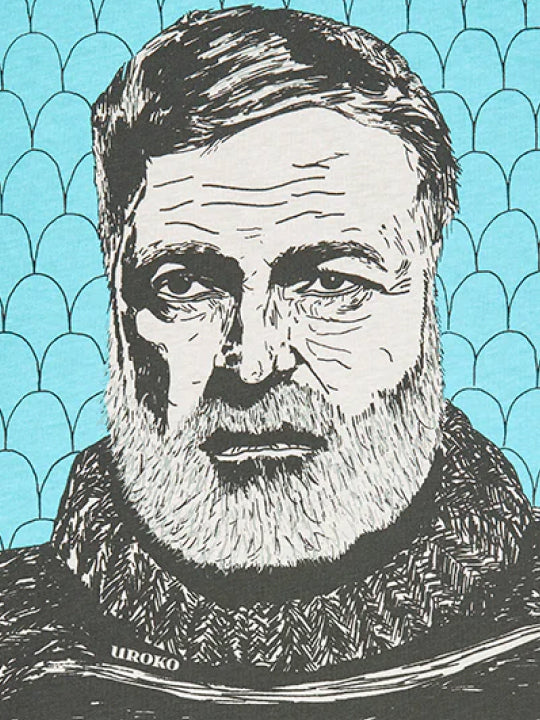
Jonathan Steinberg, aka Steiny, aka Uncle Stein, shows us how to live: in the lineup, on the cliffs greeting every passerby by name, and always sharing wisdom. We sat down with the man to soak up a few lessons on how to hold your connections tight, repair your gear, and always take the wave that lands you safely at the stairs.
We dropped by Steiny’s house on the Westside, a green 1950s era home. Out front sits a reliable pickup, a stack of worn boards stashed along the side, and a lineup of frankenbikes in various stages of repair waiting to be reintroduced to the neighborhood streets. Inside, the vibe is warm and easy: shelves stacked with a deep record collection, family photos, coastal California art, and a few good bottles of tequila or whiskey. Out back, a heavy avocado tree shades a thriving vegetable garden. It is an unpretentious sanctuary completely optimized for a life in Santa Cruz.

A lot has changed over the years along West Cliff. The crowds are denser, the lineup is hungrier, and the world moves at a hyper-curated, algorithmic pace. Yet if you stand on the cliffs near Steamer Lane on any given afternoon, Steiny remains the ultimate antidote to modern surf. While everyone else is hustling for priority, Steiny provides a masterclass in staying deeply rooted, wildly creative, finding the good, and staying perpetually stoked.
Steiny isn't interested in following the pack. He rides a surfmat, finding the often-overlooked edges and corners at The Lane. He can always spot a clean runner, connect with a friend, or find a piece of sea glass that makes a session completely worthwhile. On days when I’m making excuses not to head out, I will often receive the surf report texted to my phone.
"Monday afternoon report! Funny surf. Opening day, nw swell. The jr high surf club out. Maybe 50 kids on a wide variety of surf craft. Shrieking, pearling, being happy kids. Hard to really surf, but loved the happiness. They went in, the tide continued to drop, and indicators turned on. I got one from Middle Peak to the base of the stairs. Just great. Lots of friends and good dogs on the cliffs. "

It’s a philosophy of optimization over greed. Out on the mat, there are no hard rails or rigid fins to fight the wave; instead, the lightweight ripstop fabric flexes to the contour of the wave face. "It feels like everything and looks like nothing," Steiny says. It’s an art of total surrender—finding zero drag, locking into a trim line, and catching "the squirt" that slingshots you down the line like a pelican gliding on the pressurized air above a swell line.
Steiny’s relationship with mats predates the high-performance inflatables in the lineup today. Growing up in West LA County during the late '60s and early '70s, he cut his teeth in the snappy beach break at Zuma. Back then, before the body board was introduced, there were only heavy canvas mats and cheap, molded styrofoam "foamies" grabbed from behind the ice cream counter at the local Thrifty for three bucks. They were brittle, disposable boards that might last a few weeks or just a few hours, but they sparked a lifelong obsession with prone glide.
The true game-changer arrived about twenty years ago when modern mat pioneers like Paul Gross—an associate of George Greenough—began crafting inflatables out of ultra-lightweight ripstop nylon. Borrowing one for a test run, Steiny was instantly hooked. Once he figured out the tricky duck-diving technique and unlocked that first slingshot cover-up, there was no turning back. "If you want to goof up your board surfing, you ride mats," he chuckles. "All of a sudden, you stop thinking about your boards, and you just want to get that squirt." It was like learning to surf all over again as a twelve-year-old—chasing a weightless glide that turns a routine local session into pure, evangelical joy.

Steiny’s approach to the ocean isn't limited to riding mats—it bleeds directly into how he fishes. His setup bypasses high-tech graphite rods and expensive gear, applying that same ethos of simplicity, repairability, and pure fun to the local kelp beds.
You’ll often find him surfboard fishing for rockfish and halibut with vintage Penn reels—the mechanical equivalent of a slant-six engine. "They’re like your reliable old pickup truck," Steiny says. "Not necessarily a fast retrieve, but it’s not gonna crap out on you when a big fish is on." Inexpensive, virtually indestructible, and easy to service yourself after an accidental dunk in the salt, he buys them at garage sales for four or five bucks, fixes them up, and passes them along to friends.
Other times, he’ll head out with cheap trout gear or a tiny spinning reel off the rack from Big 5, casting two-inch swimbaits or a Kastmaster on six-pound test directly into the kelp. "You catch a two-pound rockfish and bend the pole in half. Once in a while, you get lucky and hook a ten or twelve-pound lingcod on that light tackle—you just have to keep your line tight or they’ll disappear with your lure. It couldn't be much more fun."

A couple of years back, Its Beach was pumping, and I was in desperate need of a fin. I dropped by Steiny's house on the Westside. He handed me a pair of black Viper MS with a yellow dot. One of the straps had been repaired with dental floss, superglue, and a tight wrap of electrical tape. It fit perfectly, and I still use it today. That same fin ended up immortalized on canvas at his recent exhibit over at Tanuki Cider on Swift Street. Naturally, I swooped up the print the second I saw it on the gallery wall.
In the show, Steiny takes salvaged swim fins and transforms them into vibrant visual stories—a celebration of shape, color, and outline nuances most people overlook. These are portraits of a life spent in the brine. The scratches, worn rubber, and mended straps aren't damage to him; they’re character, documenting time and environment. Steiny approaches each print much like a traditional portrait, capturing the use, abuse, and salt-crusted history carried through the shorebreak. Just like the lines, worn teeth, or broken nose on an old face, every single fin tells a story.
That story resonates differently depending on who is standing in front of the frame. Bodysurfers are often drawn in by sheer nostalgia, hunting down the Churchills or Duck Feet of their childhood memories. Others respond purely to the visual composition, choosing prints for their vibrant colorways, bold outlines, and relaxed, beach-bred aesthetic. One collector in Hawaii owns five of Steiny’s prints hanging in his home... he has never surfed a day in his life.

At the heart of the show hangs a piece of remembrance: a photograph of Brad Honda, a respected Newport charger who passed away a few years back, packing a barrel. As the brother of Tanuki Cider proprietor Robby, Brad is remembered deeply by family and the community. Honoring his lifelong love of bodyboarding and whomping, Brad sits right at the center with the fin portraits arrayed around him, serving as a poignant tribute.

It hasn't all been clean lines and smooth trim. A terrifying crash on Highway 17 left Steiny with a concussion, brain bleed, constant tinnitus, and vision challenges that made driving an uphill battle. Recovery came through occupational therapy, crusty '60s Schwinns, interval training, and the garden, but the ocean was the ultimate remedy. "As soon as I went back to the water, it felt correct," Steiny reflects. "In the water, it all goes away. The accident didn't steal my joy; it just made accessing my joy a little harder."
What sets Steiny apart is his radical commitment to gratitude. In an era where it’s easy to get cynical, he’ll remind you just how impossibly lucky we are for our families and friends, for this slice of coast, and for the simple gift of cold ocean water.
"I'm just content… you could put it on my gravestone. I have a nice life, and the things that surround me satisfy me. I don't find myself looking in my neighbor's yard too much. I'm happy with my house, happy with my neighborhood, happy with my friends, happy with my surfing."
To order prints on canvas or paper, you can contact Steiny directly via email at harmless.eccentric@gmail.com, find him on Instagram at @uncle_stein, or reach out to the Great Highway Gallery at 43rd and Lawton in San Francisco for paper prints floated on bamboo archival paper in a framed presentation.

Sink and Swim!
Fin Portraits by Jonathan Steinberg